Type: Visual Design / Brand Identity
Role: Brand & Visual Designer
Engagement: Freelance Project.
Year: 2026
Role: Brand & Visual Designer
Engagement: Freelance Project.
Year: 2026
Etem is a digital platform connecting curated furniture and design objects with intelligent data and spatial visualization tools.
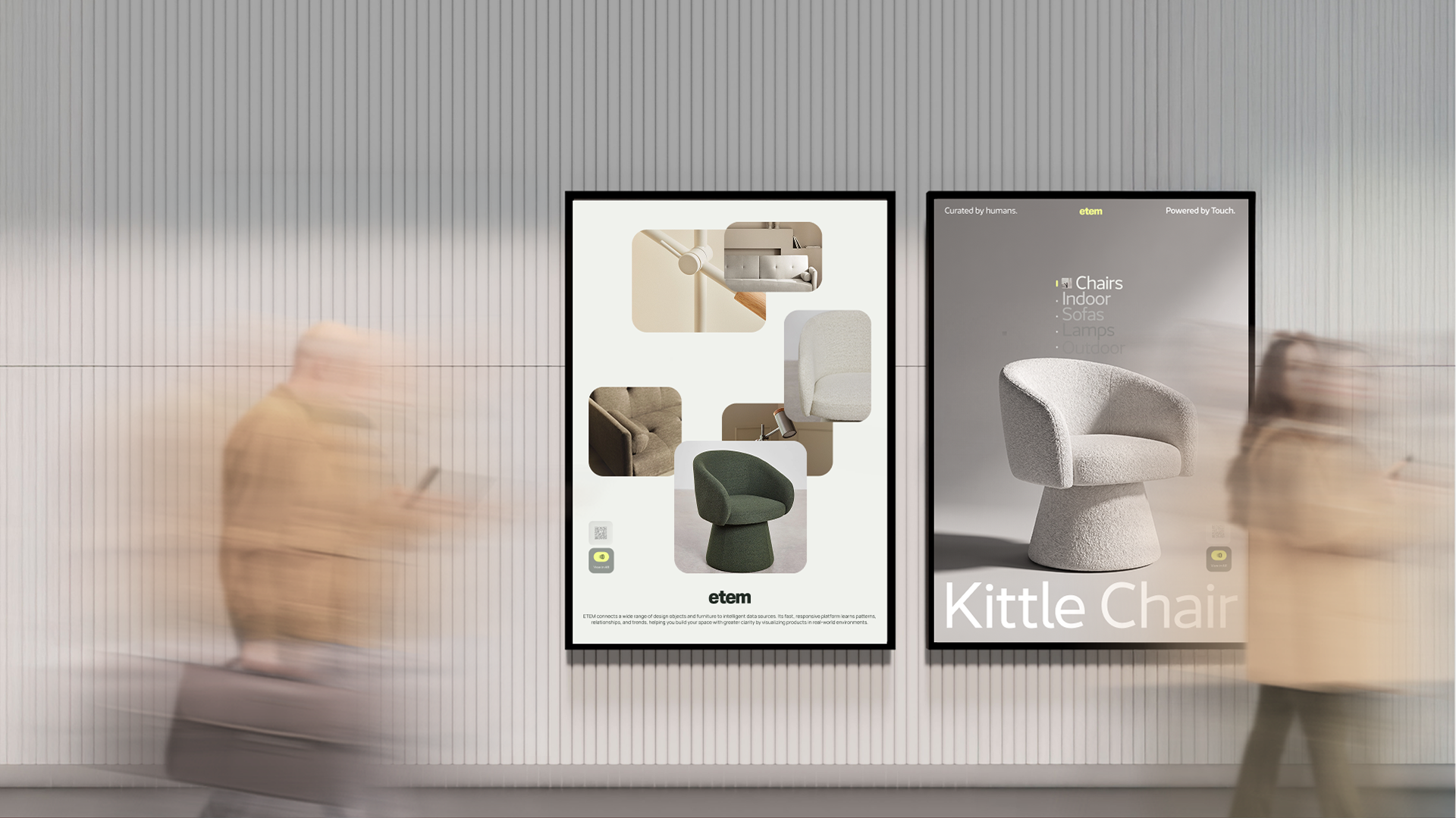
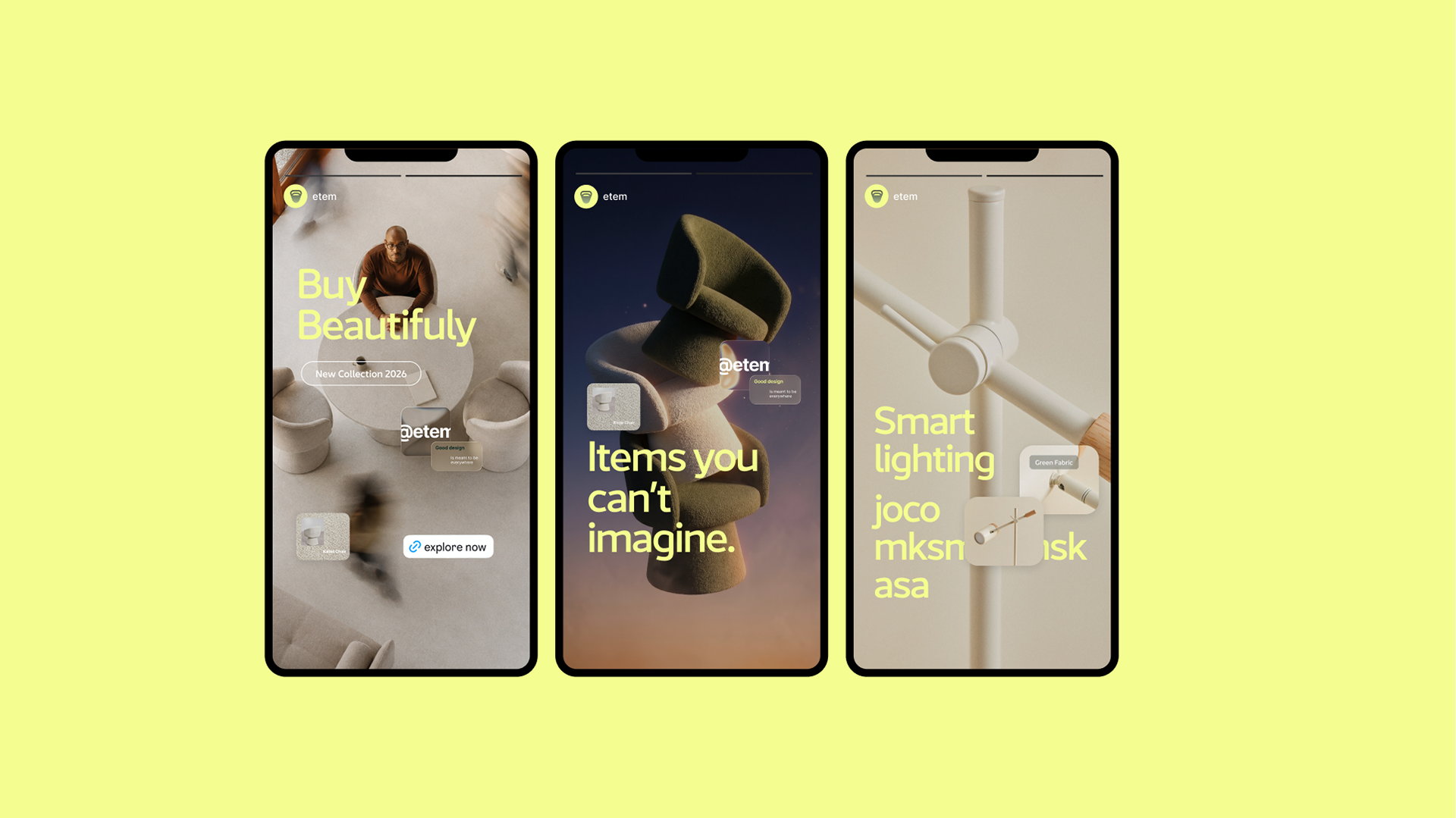
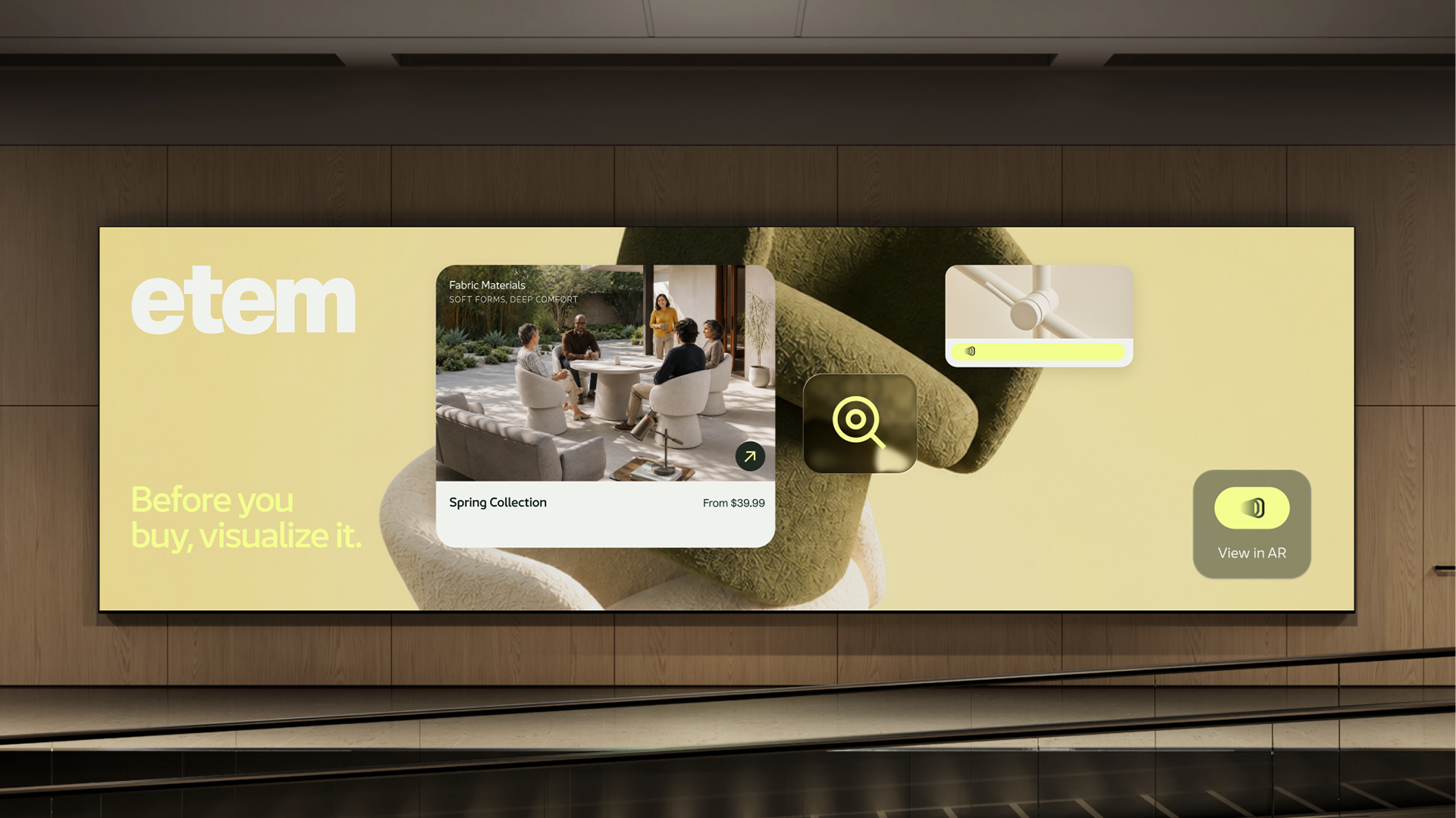
I redesigned their ecosystem to position Etem as an accessible, tech-savvy product, moving away from the distant and rigid feel of traditional, overpriced furniture showrooms.
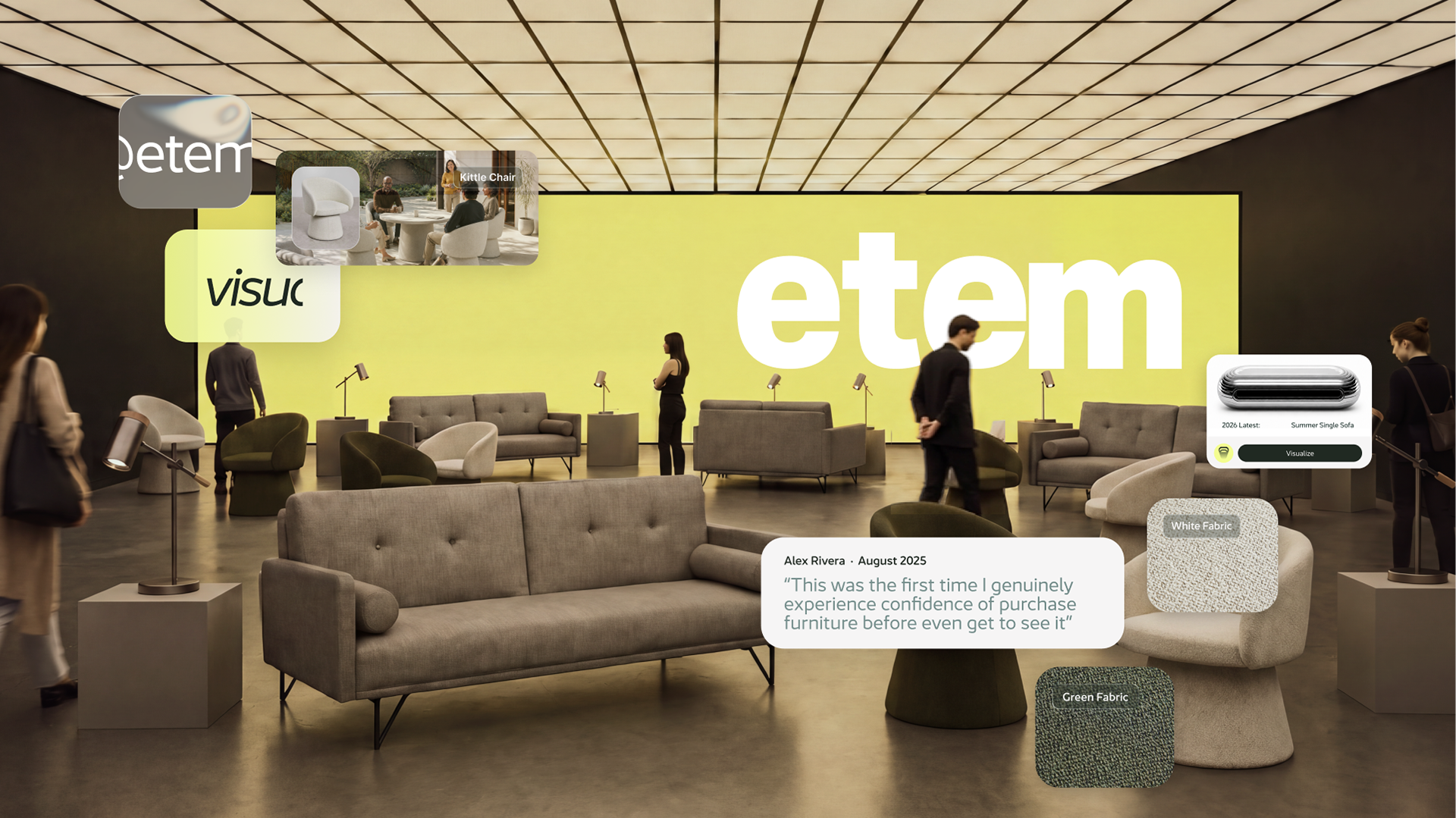
The challenge:
Following industry conventions, Etem's original branding relied on a generic visual statement rather than a strategic one, failing to showcase its true value. As a result, target users lacked the interest to even try the app or learn more about the brand itself.


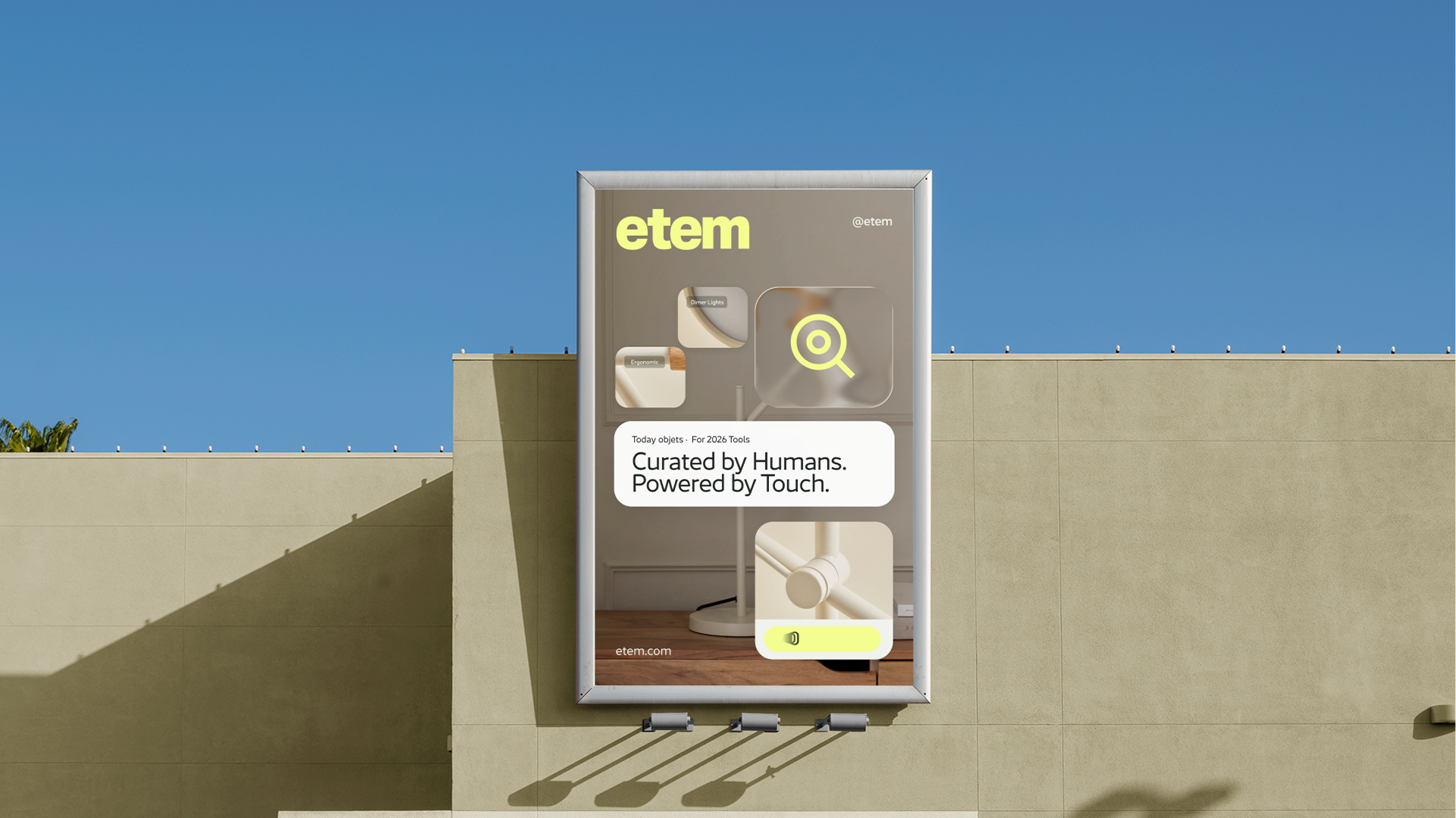
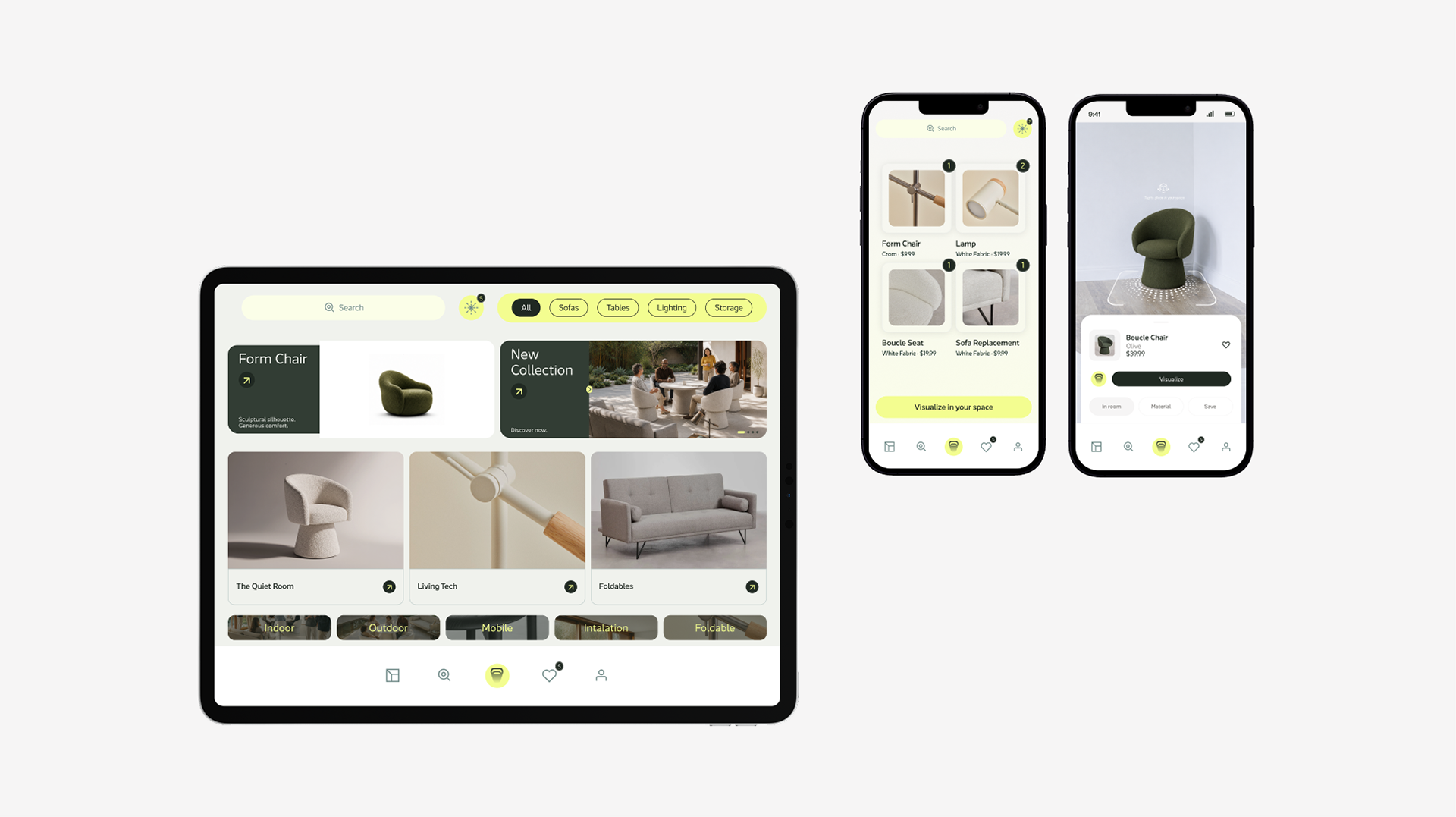
Component Library:
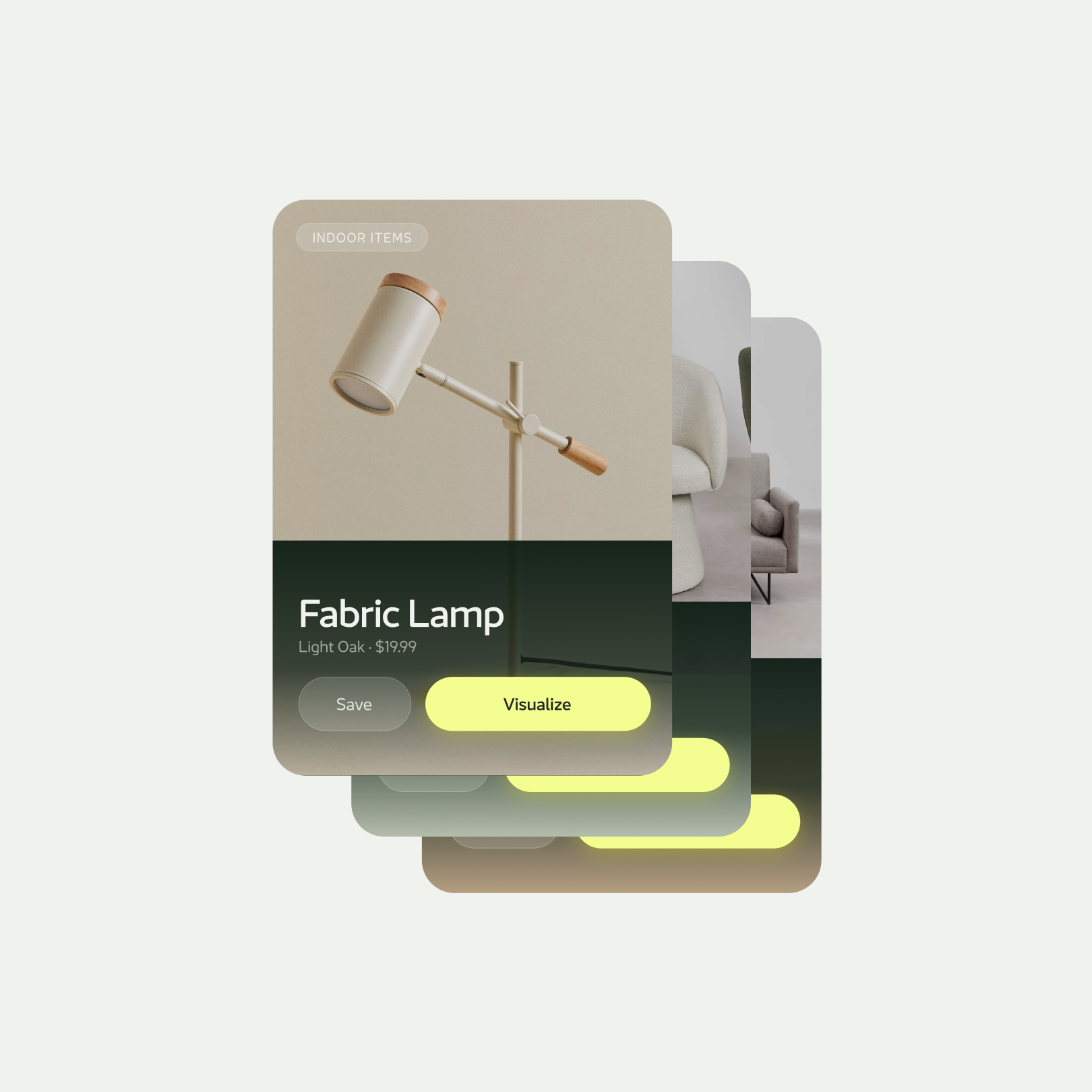
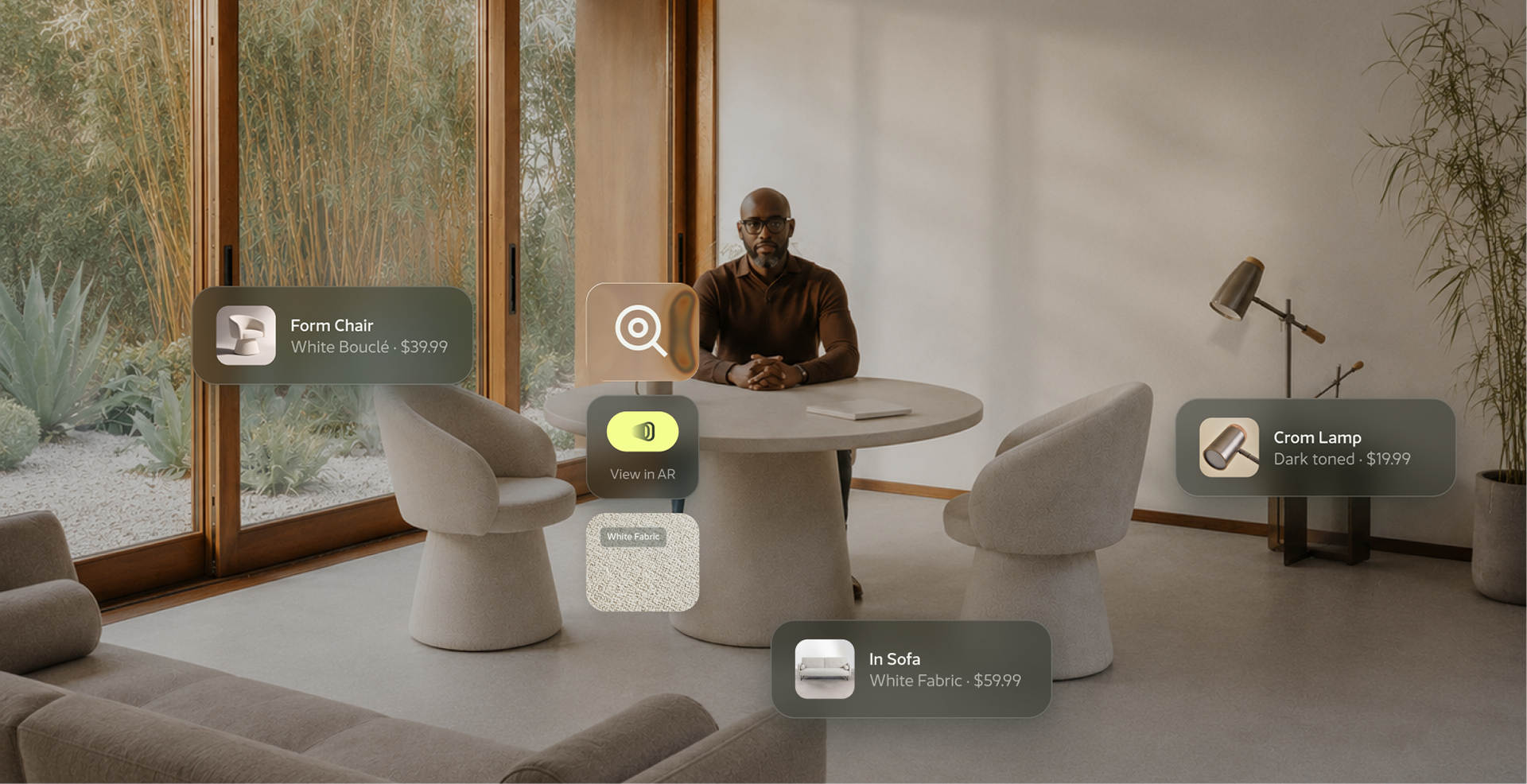
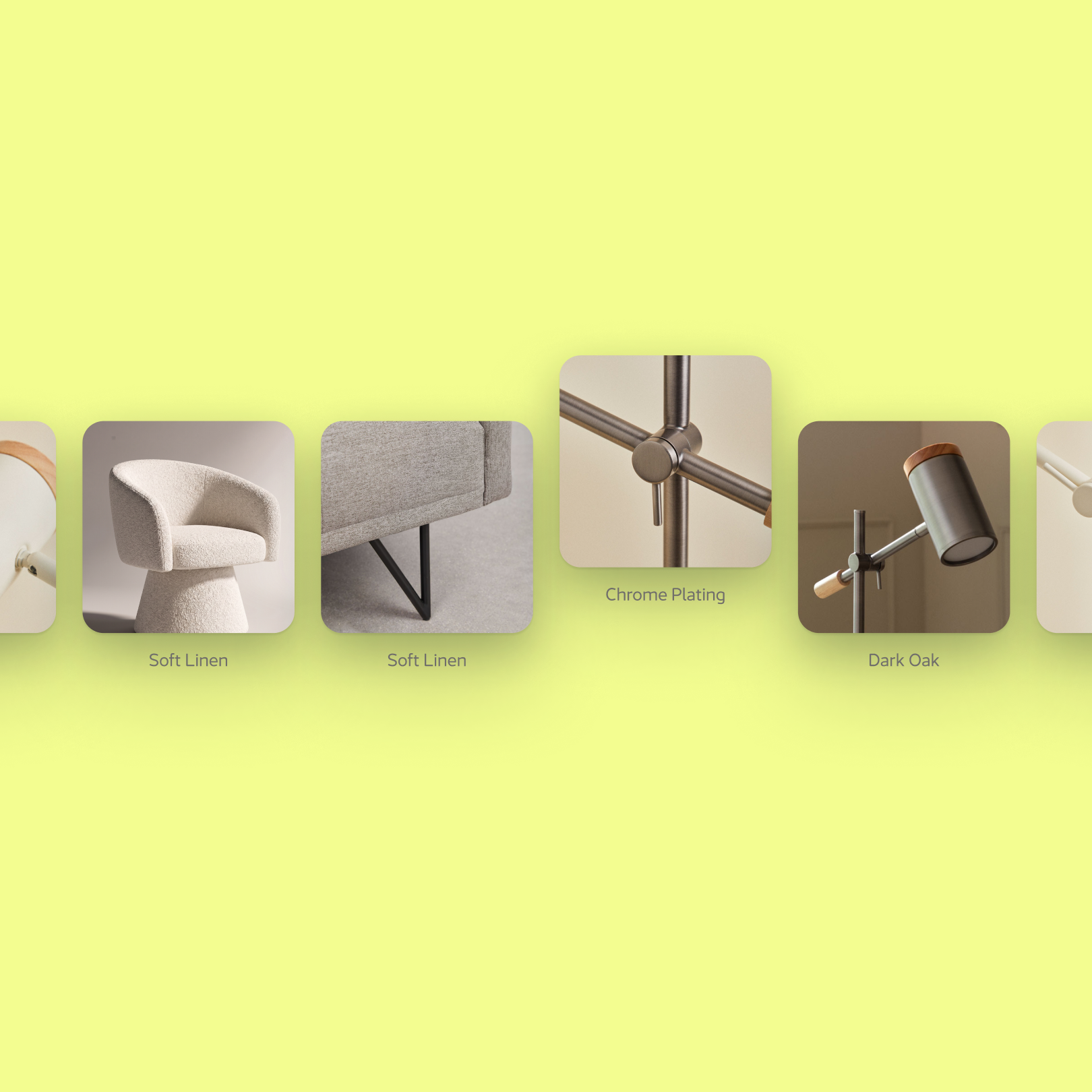
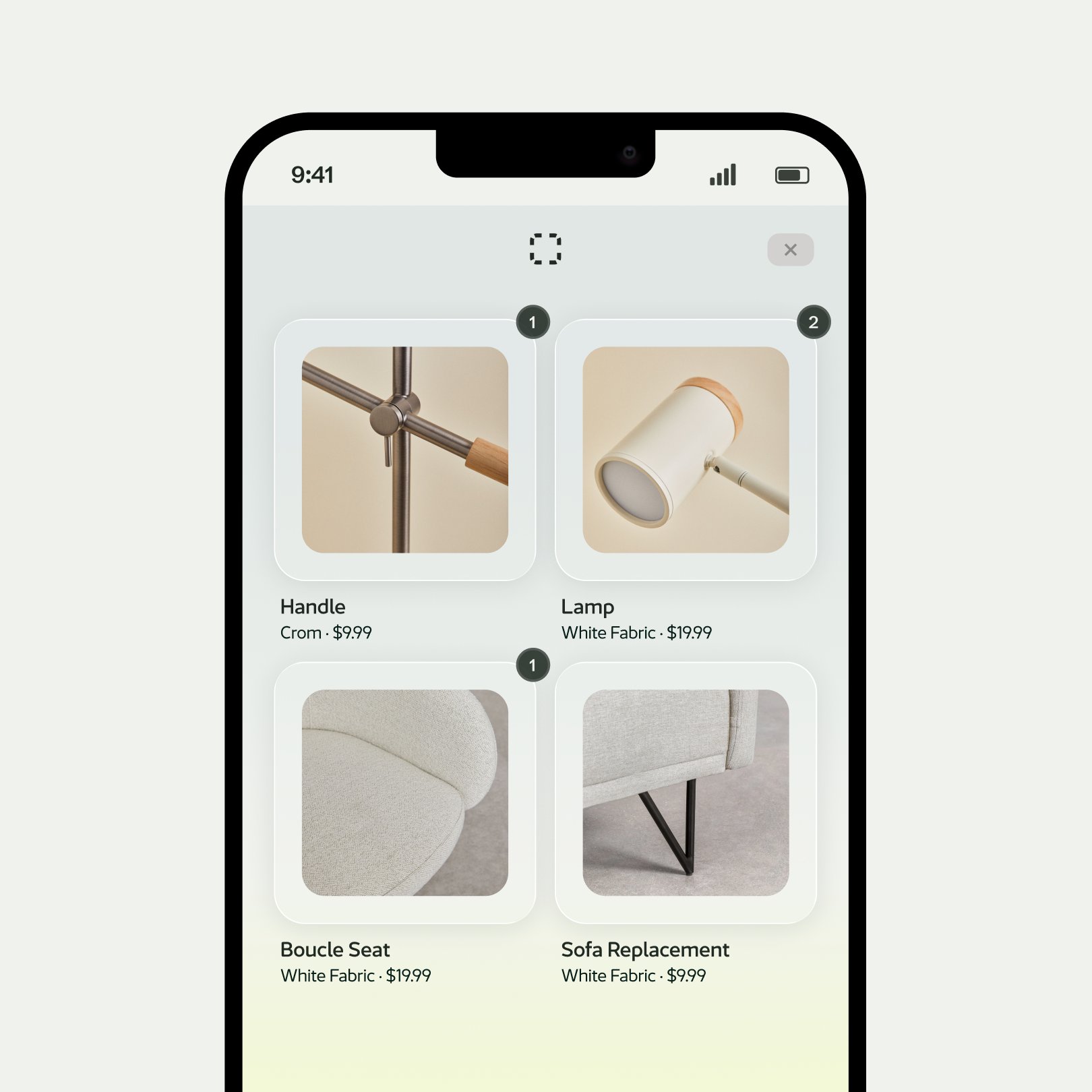
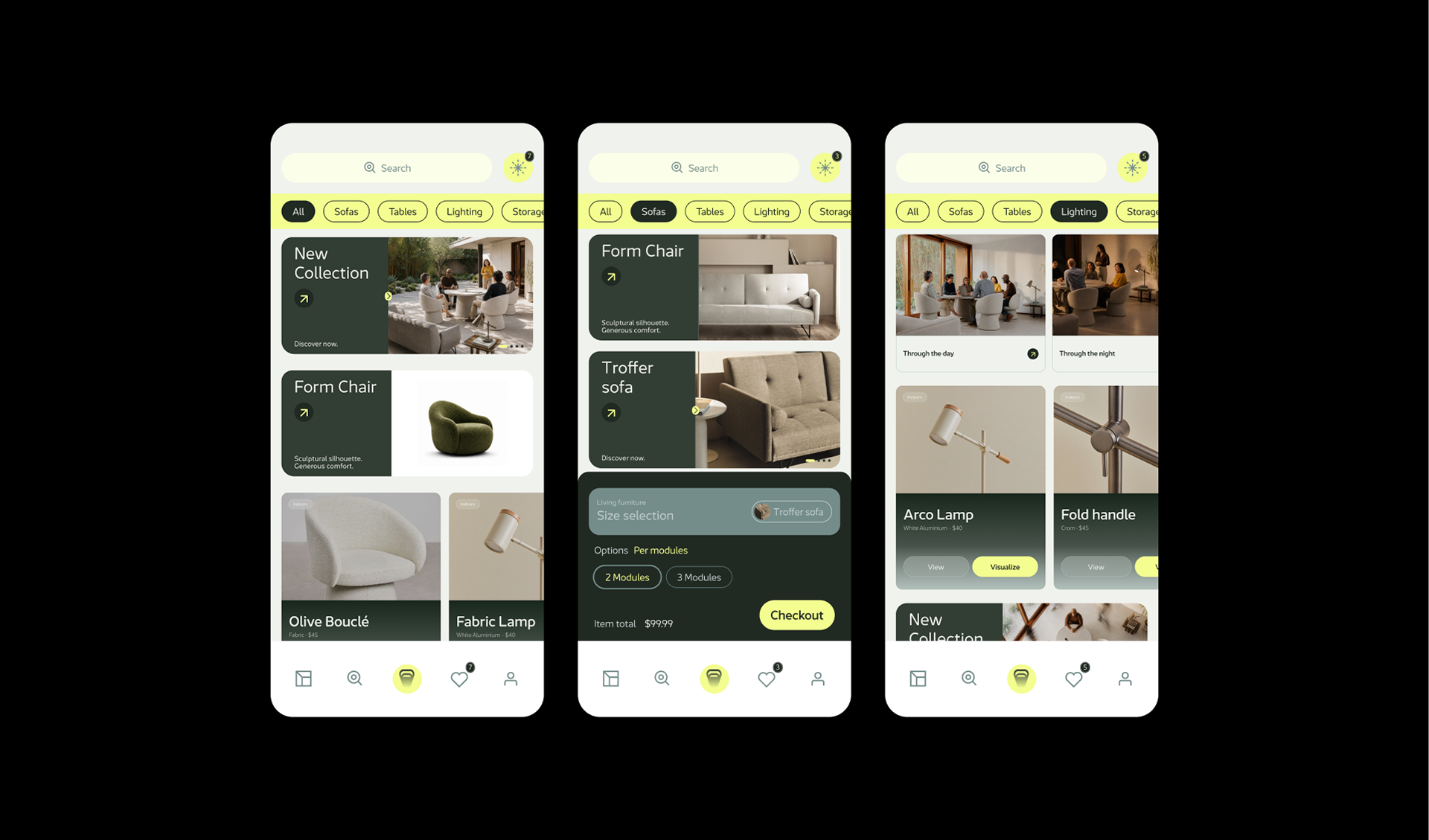
The asset creation phase focused on utilizing strategic UI elements to showcase key features, products, and tech-savvy interactions, moving beyond standard components like generic buttons or non-communicative elements.
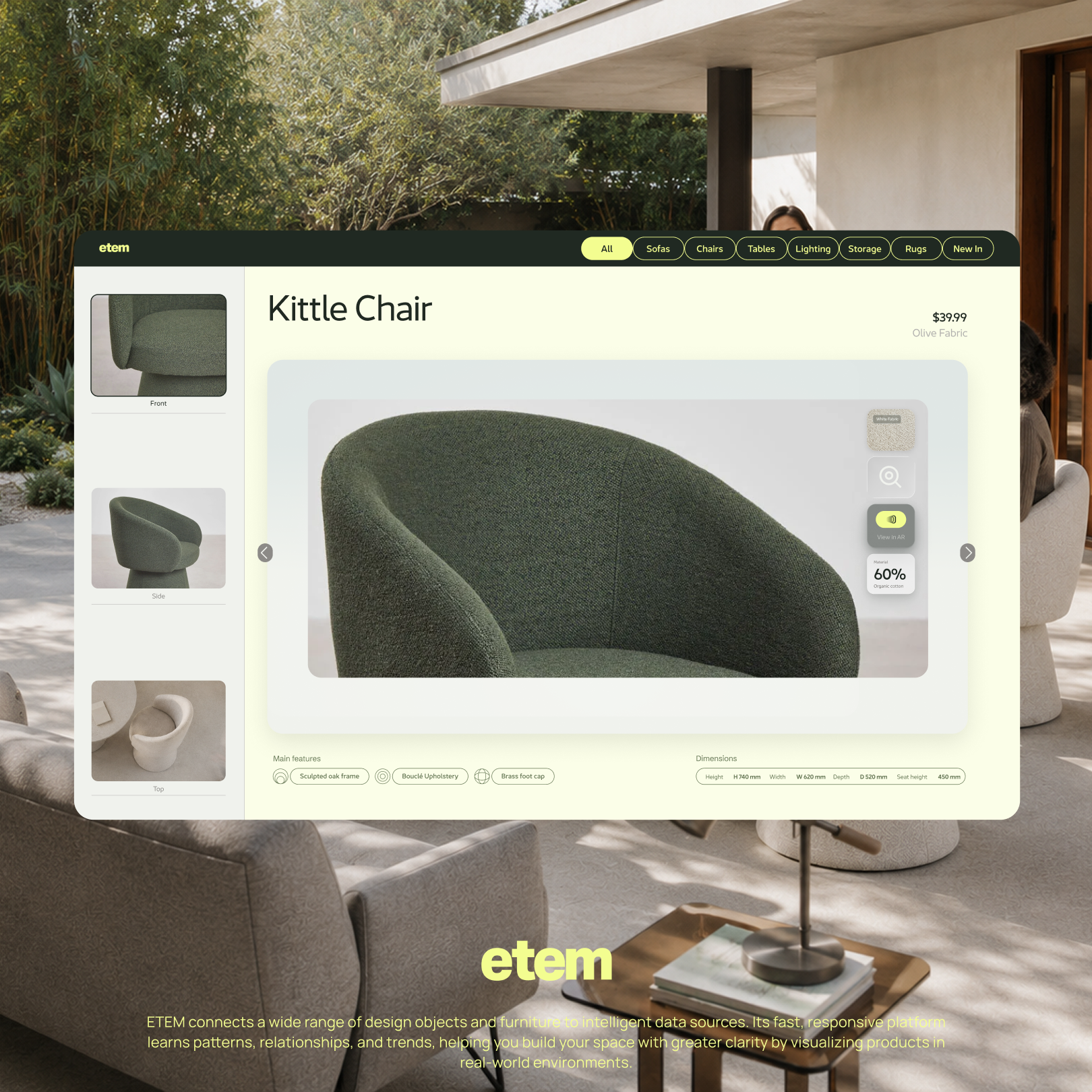
AI Pipeline:
AI tools were integrated to accelerate execution and maximize refinement time: Claude Code and MCP generated the foundational UI structure from our token library, ChatGPT and Google assisted in art direction, and Jitter AI expedited motion testing
What Was Achieved
Etem had a strong value proposition rooted in tech-savvy culture, but its visual presence followed the conventions of traditional furniture retail: a clean grid, an object shot on white, a price out of reach. It read as authority and landed as distance, giving potential users no reason to try the app.
How We Got There
I rebuilt the brand and product language around a single idea: tactile curation. The identity keeps the editorial taste of a showroom and removes the arm's length. That runs through a three-tier token architecture, a component set designed to be handled rather than browsed, and an image pipeline that treats furniture as material instead of catalogue.
Challenges
Etem now runs on one system across light and dark, phone and tablet: four contexts, one set of components, no duplicates. The identity gives the product a position the category does not occupy, and gives the team a framework that holds as the app grows.